(Note: This article is a crass, shameless exercise in self-promotion for my book. For the first time in the history of this blog, I am selling something. But, the book itself is in keeping with the ideas and objectives of The Third Helix, so I don’t think it’s too out of place here. But if that puts you off, I don’t want to presume on your time and interest by not stating that up front.)
I didn’t grow up in church or with much real exposure to Christianity or religion. I grew up with pop culture like John Boorman’s “Excalibur,” and this scene of Perceval’s vision of the Holy Grail got its hooks into me since the first time I saw it:
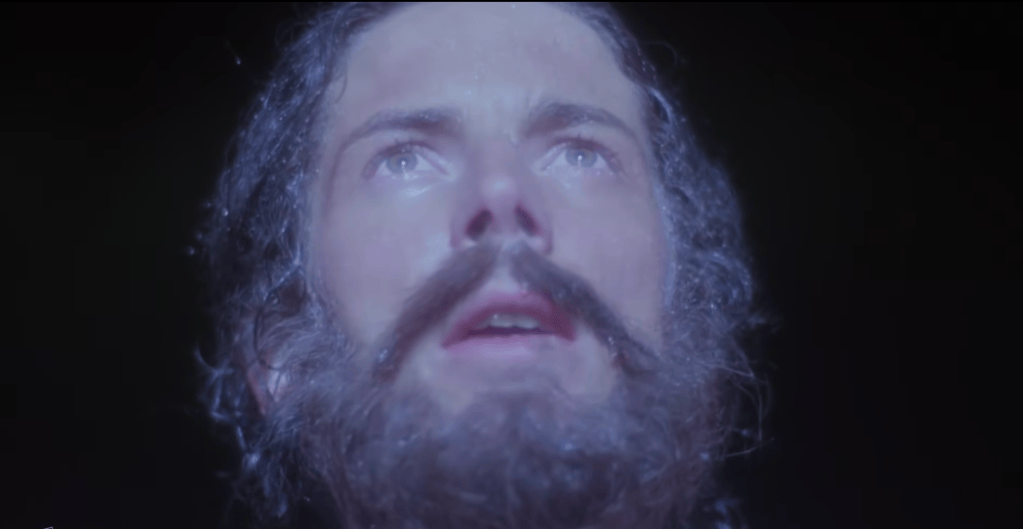
Of course, several decades and a few history books later, I now understand that the actual trajectory of belief surrounding the Holy Grail is a bit more nuanced and complicated than Arthurian legend or Indiana Jones and the Last Crusade would suggest. But, just the same, the idea of the Grail and what it represents is a great synthesis of the genuine mindset and belief system behind the very real and historically grounded medieval preoccupation with relics and relic-hunting. So, it is a defensible stand-in for beliefs and attitudes and assumptions that have pervaded Christendom over the millennia, even if it’s not a perfectly technically historically factual depiction of them.
I have always loved Arthurian legend from my first exposure to it from Boorman’s masterpiece, and that love is most acutely felt from that scene of Perceval’s Grail vision.
As a six or seven-year-old child watching that (hey – it was the ‘80s, and we had cable, so I saw some stuff … ), I had no rational understanding of what I was seeing. I was dimly aware of Jesus Christ as the mascot standing quietly behind all the other, more colorful mascots for this annual event of “Christmas” that we observed, but regardless of what I could grasp with my intellect, that scene lodged itself in my soul and it has never left.
The tragic beauty of it – the ineffable, unnamed spiritual longing that infused the Roundtable Knights’ quest, Perceval’s naked, crushing desperation, striving to touch some dim, fading light of hope through pitch-black despair and defeat … it broke my heart.
Today, that heart is filled by the One whose glory gives the Grail its mystique and apparent meaning, but that scene – and the idea of the Grail and all that it represents for those who have maintained its legend – continued to haunt me for many years after my own spiritual rebirth.
There was just something about it. Even after years of studying the Bible and coming to know Jesus Christ, there was an allure to the Grail that I couldn’t quite put my finger on, and a shroud of darkness to it that demanded deeper understanding. There was an itch that I couldn’t stop picking at, like a splinter in my mind.
There is a Secret to the Grail, and “the Land and the King are One” seems more misdirection than revelation. That was fine for moving the plot of the movie along. It is deeply unsatisfying to the true mystery of the Grail.
To expound upon my earlier point – whether or not the Grail exists is irrelevant. The legend of the Grail exists. People have believed the Grail exists, and that fact alone bears examination. That the Grail, in some form or another, has virtually always been a major element of our collective understanding of the gospel – that means something, and nothing in existing Grail lore has been adequate to explain that meaning, at least by my lights.
And, I tend to obsess over things like this, until I understand them (or believe that I do). I thought about it quite a lot over the years, and prayed about it, and was reinforced in my preoccupation by Dan Brown’s wildly overrated work of historical/cultural vandalism, The Da Vinci Code.
Until, one day … I cracked the mystery.
Or so I thought.
I believed I stumbled upon an insight that merited exploration, so I began writing, well … a sermon, basically, in short-story form. It was going to be no more than 20 pages, if that. I picked a couple of stock characters out of the ole’ bag o’ tropes so I’d have a couple of mouthpieces to bat my insight around in a short dialogue about the Grail and what it means: an amateur archeologist seeking the Grail, and a strange, wizened old man who claimed to have it, and who would taunt the other over his naivete about what it is and why he wanted it and what he planned to do with it if he had it.
There’s a cliché often invoked by authors about a story taking on a life of its own and getting away from the author’s control.
In my own experience, that checks out.
I put these guys in a room together with a very specific script to follow, but they had no interest in my notes and they just would not shut up about it. The initial mystery led to answers, but those answers came with their own mysteries, and it just kept going, and my planned 20 pages turned into 500.
I truly do not believe that I wrote this story. I discovered it. I gestated it, and gave birth to it through painful labor, giving it structure and nourishment through my writing, but the story itself, I realized through the process, has always been there, waiting for someone to extract it from the centuries of cultural and religious sediment that has accumulated around it.
I wrote it 15 years ago but couldn’t get a publisher to look at it. A few friends read it and urged me to self-publish, but being the caveman Luddite that I am, and believing foolishly that a traditional publisher’s approval was a necessary threshold of validation, it’s been sitting on my laptop ever since.
One of those friends, Bogdan Michka, was particularly unrelenting and eventually prevailed upon me recently to let him publish it online.
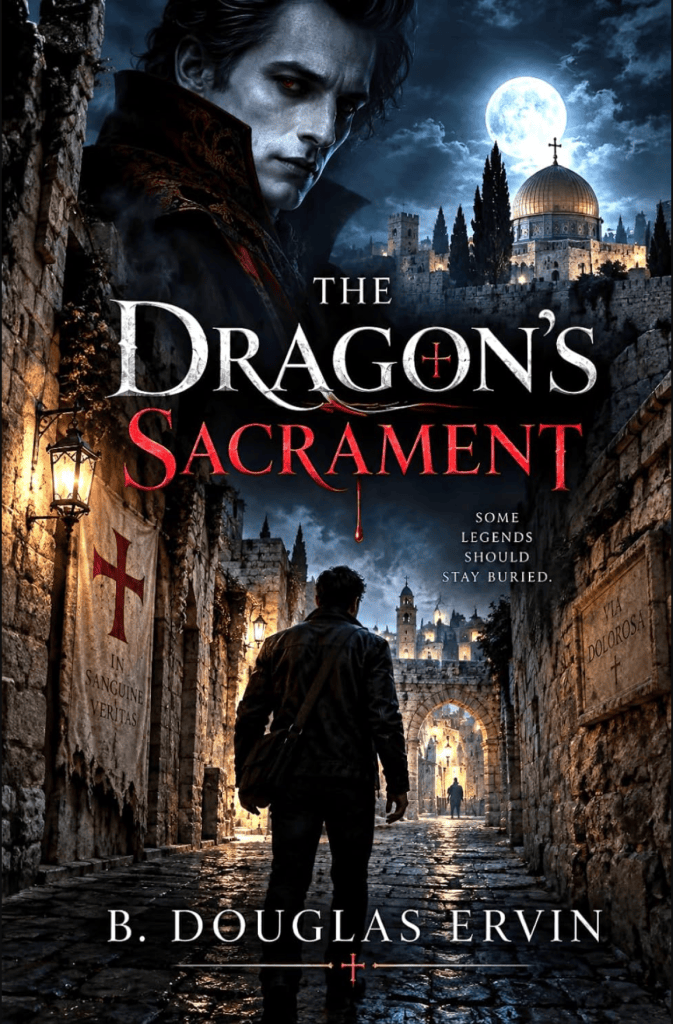
It’s called The Dragon’s Sacrament, by B. Douglas Ervin (that’s my alias so I don’t get mobbed by fans), and can be found on Bogdan’s website: https://en.books4.you/
The Dragon’s Sacrament is my answer to the question that scene planted in me when I was too young to understand why it mattered: What is the Secret of the Grail? Whom does it serve? I think I know now. Whether I’m right is another question entirely — and that, I suppose, is for the reader to decide.


Leave a Reply